
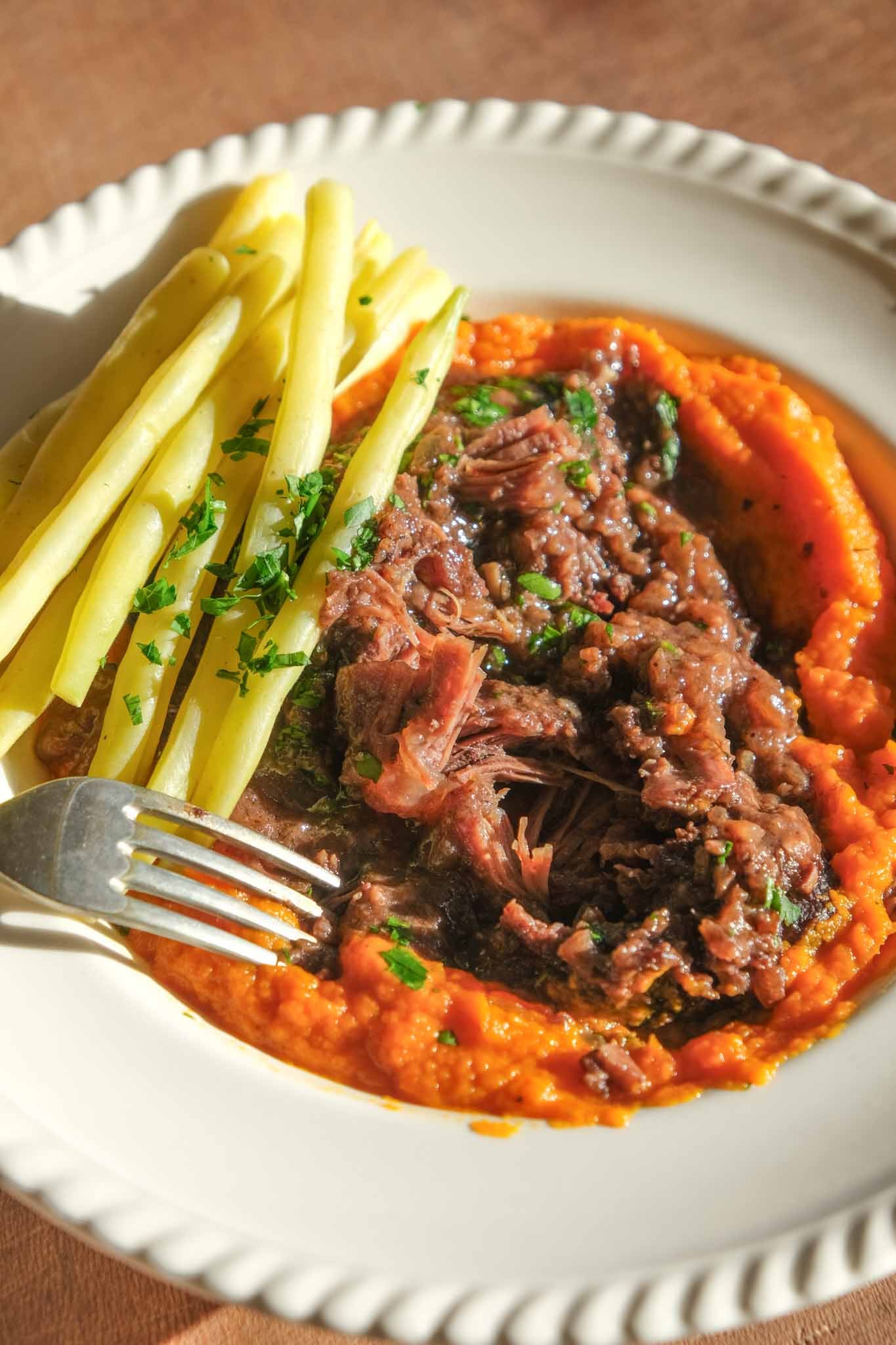
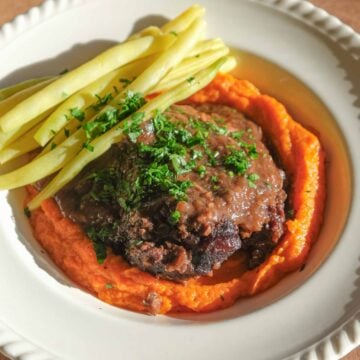
These Beef Cheeks with Carrot Purée are slowly braised in red wine and beef stock until fall-apart tender, then served over sweet roasted carrot purée with steamed beans and plenty of rich red wine sauce. It quite like a gorgeous French-inspired dinner, but everything for the beef cheeks is simply added to one pot and left to cook in the oven.
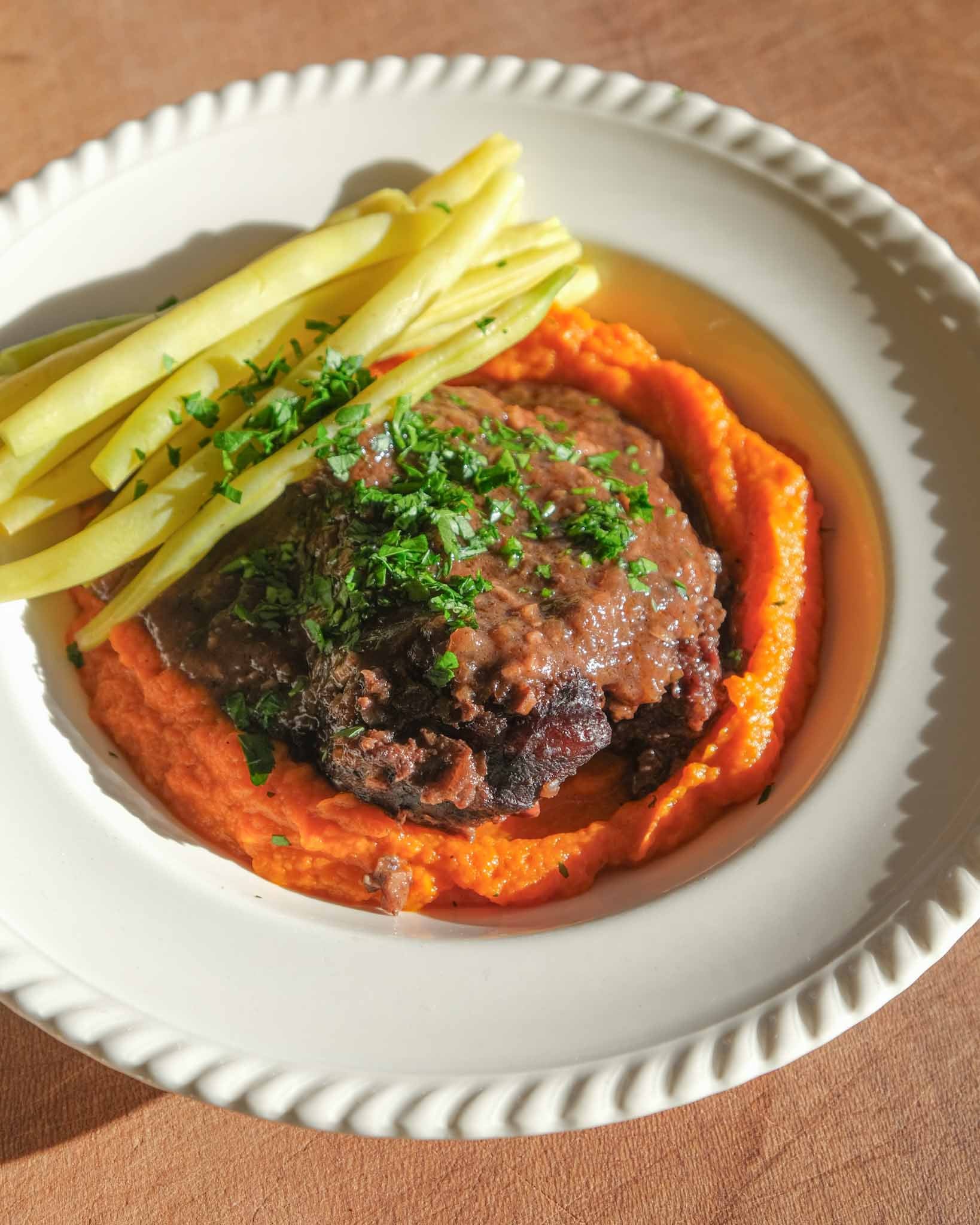
I'm currently creating a Whimsical Meal Prep series where I create healthy meal prep recipes that are flavour first and macros second. I’ve been loving recipes that still feel like a proper special dinner, and these beef cheeks definitely qualify. There’s no searing or cooking off the vegetables first. You genuinely just add all of the beef cheek ingredients to a casserole dish, cover it and let the oven do the work.
The roasted carrot purée is also made without butter or cream. Roasting brings out so much sweetness that it only needs a little stock and vinegar to become really smooth and flavourful. With the beans and glossy red wine sauce, it makes such a comforting but surprisingly balanced meal.
Looking for other Whimsical meal-prep recipes? You’ll love my Roasted Capsicum Orzo with Eggplant and Prawns or my One Tray Miso Chicken Cabbage Rice Bake.
Jump to:
Why you should make these Beef Cheeks with Carrot Purée
1. There’s no searing required
All of the beef cheek ingredients go directly into the casserole dish. There’s no browning the meat or cooking off the onion first, which keeps the preparation incredibly easy. Because we're cooking it for so long, the browning all happens in the oven!
2. The beef becomes incredibly tender
After a few hours of slow braising, the beef cheeks become rich, tender and easy to pull apart with a fork.
3. It’s perfect for meal prep
This is one of those recipes that tastes even better after a night in the fridge. The beef stays tender, the sauce becomes richer and everything reheats beautifully.
Ingredients for Beef Cheeks with Carrot Purée
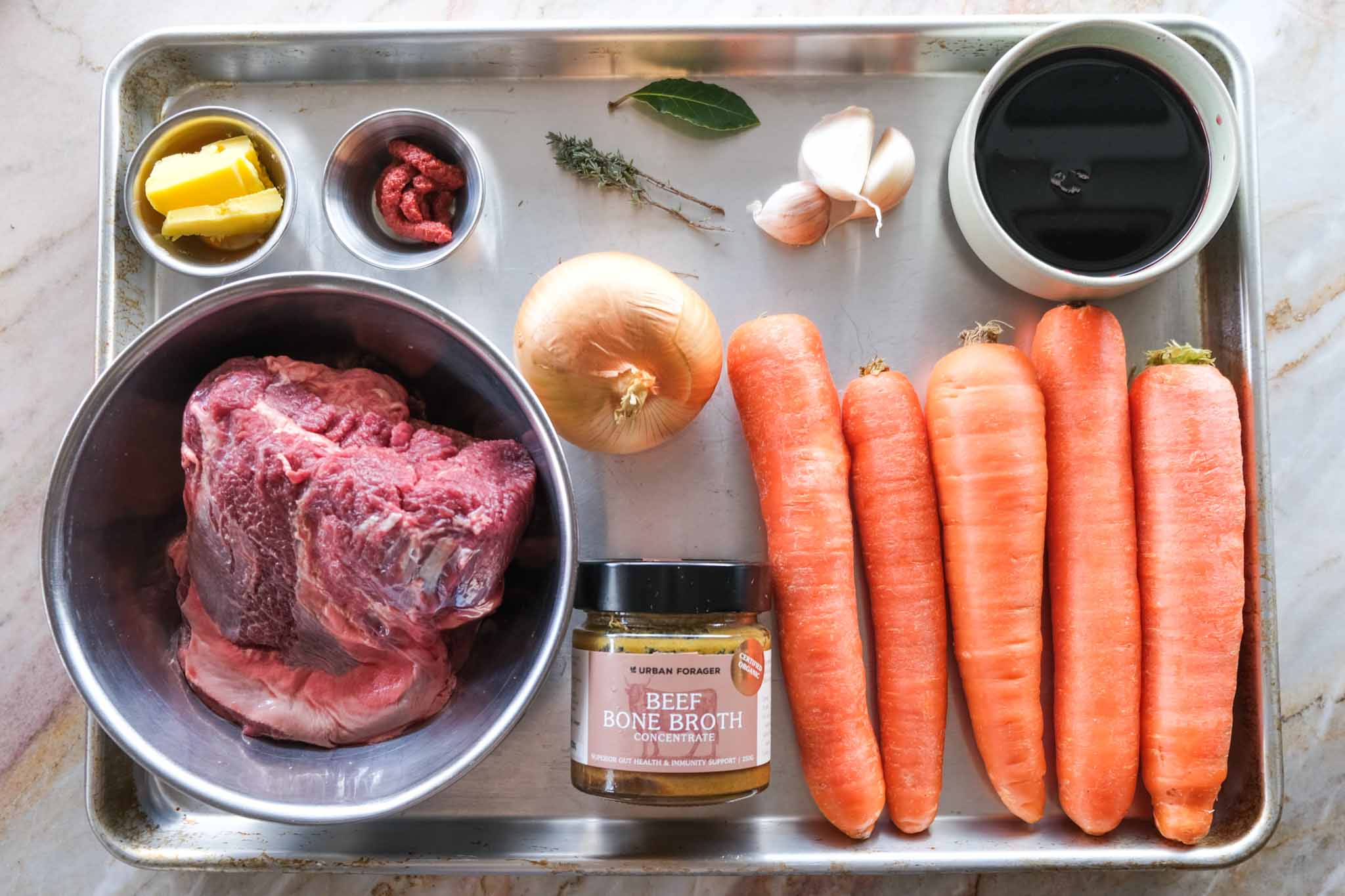
- Beef cheeks: A rich cut of beef that becomes incredibly tender when slowly braised. Trim away any thick pieces of external fat or silver skin before cooking.
- Brown onion: Slowly softens into the braising liquid and adds sweetness and savoury depth.
- Garlic: Adds flavour to the red wine sauce.
- Tomato paste: Gives the braising liquid extra richness and depth.
- Red wine: Creates the base of the rich braising sauce. Choose a dry red wine that you would be happy to drink.
- Beef stock: Provides the majority of the braising liquid and helps keep the beef cheeks tender.
- Thyme and bay leaf: Add a subtle herb flavour to the sauce during the long cooking time.
- Carrots: Roasted until sweet and caramelised before being blended into a smooth purée.
- Olive oil: Only a small amount is needed to roast the carrots.
- Vinegar: Balances the natural sweetness of the roasted carrots.
- Green beans: Add freshness, colour and texture to the finished dish.
- See recipe card for quantities.
See recipe card for quantities.
Instructions for Beef Cheeks with Carrot Purée
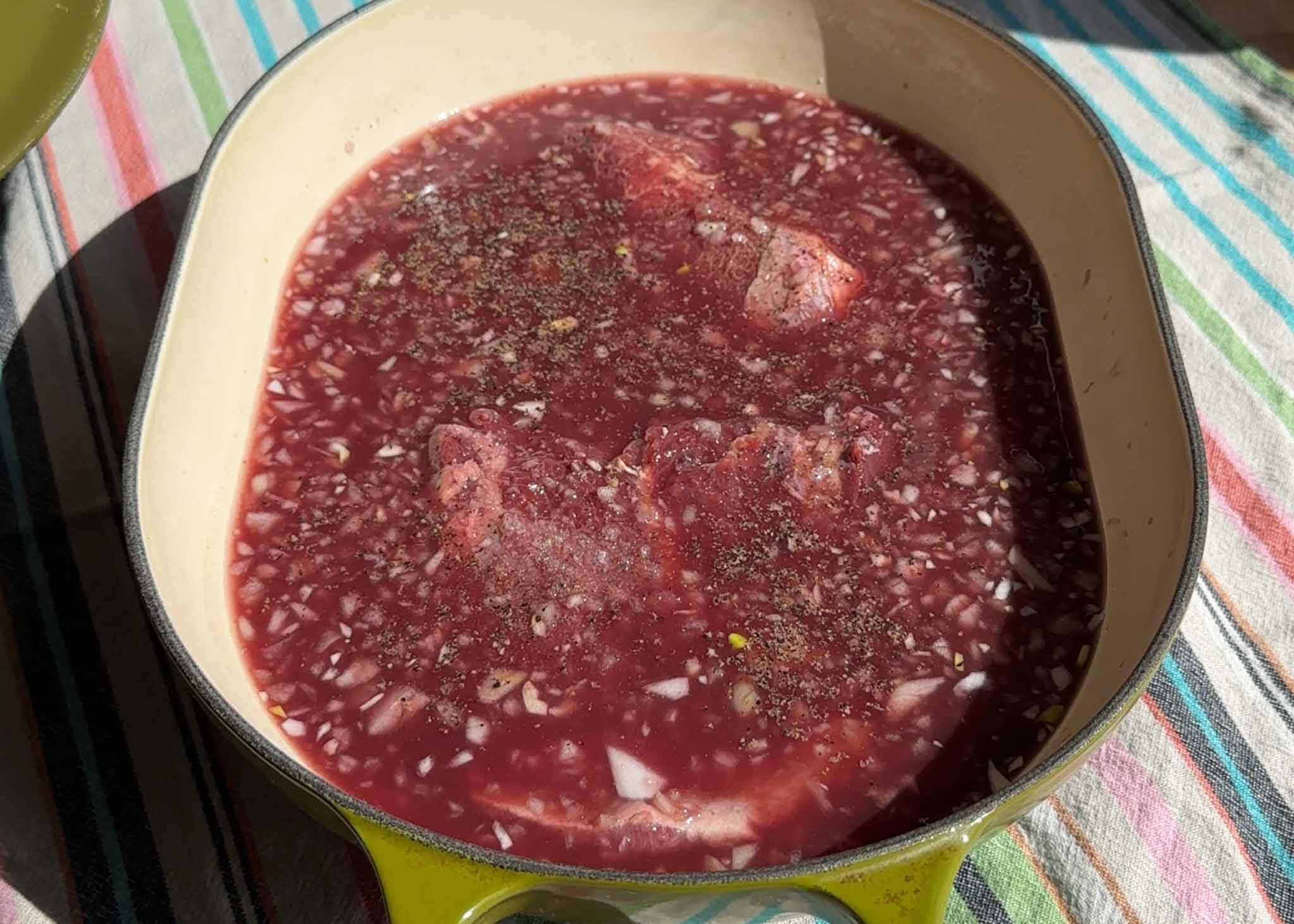
Step 1: Place the seasoned beef cheeks, onion, garlic, tomato paste, red wine, beef stock, thyme and bay leaf into a large ovenproof casserole dish. Stir to combine, cover and transfer directly to the oven.

Step 2: Toss the carrots with olive oil and salt, then roast until completely soft and caramelised around the edges.
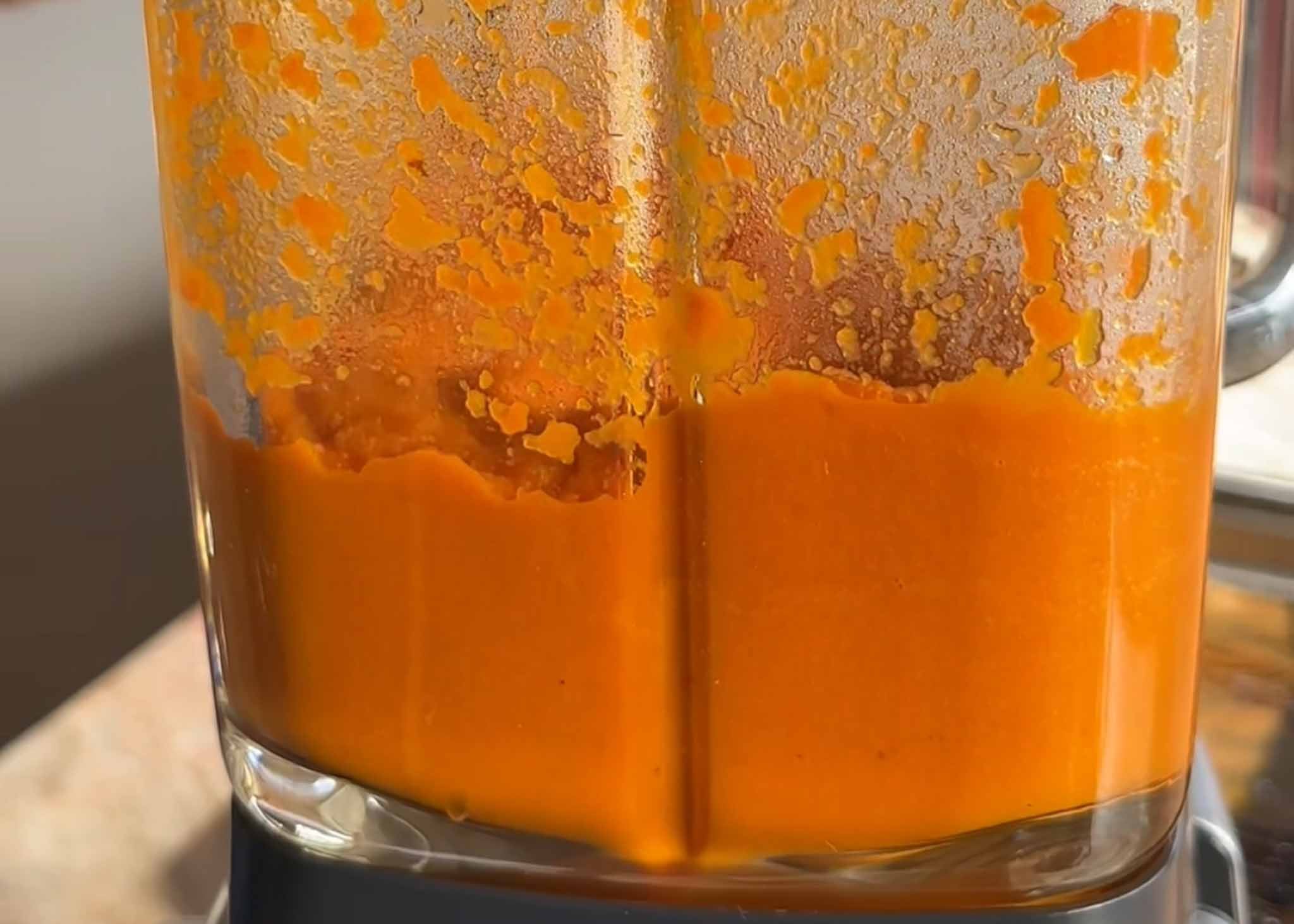
Step 3: Transfer the roasted carrots to a blender with a little beef stock, vinegar and salt. Blend until completely smooth, adding more stock as needed.
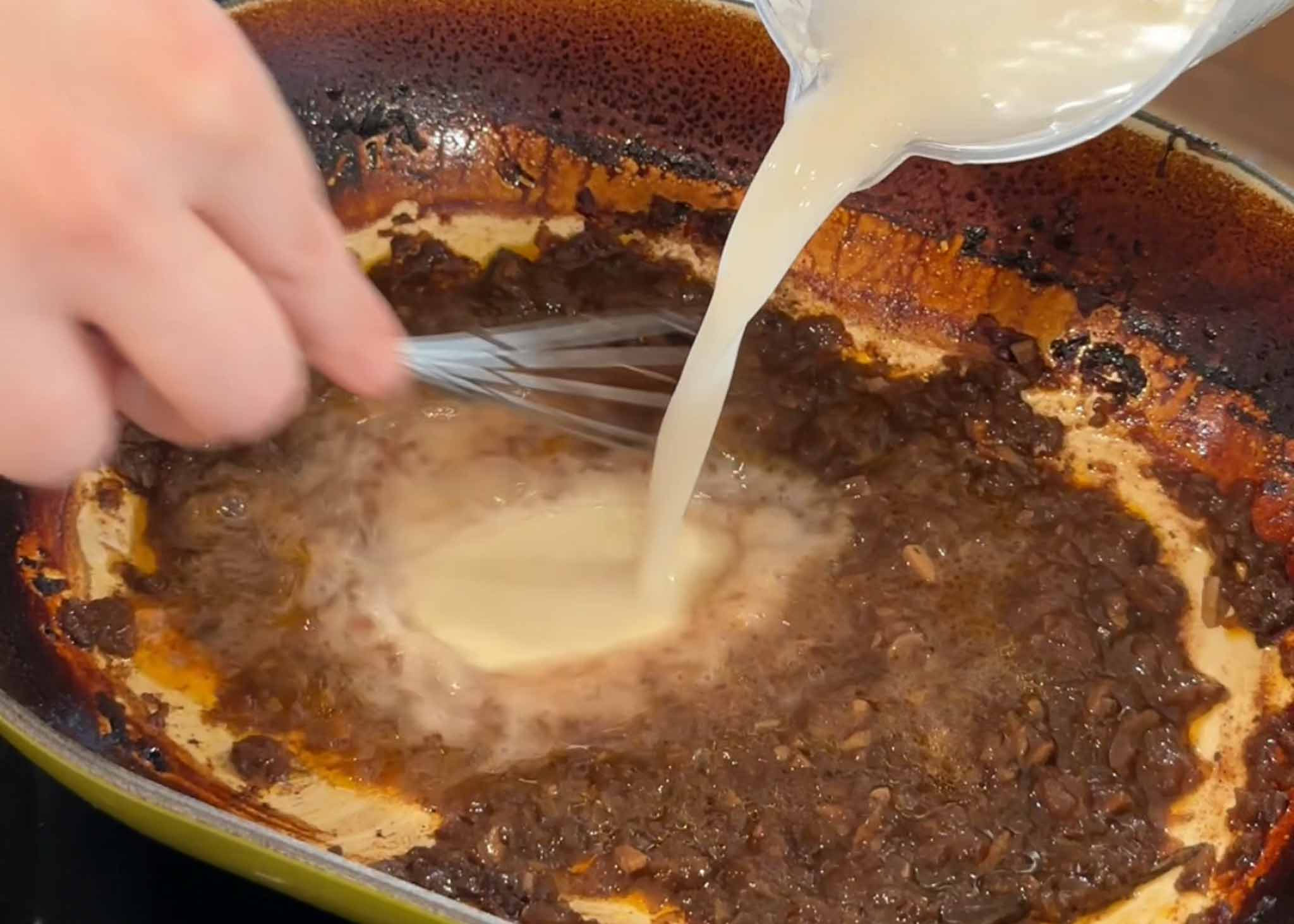
Step 4: Remove the tender beef cheeks, then simmer the remaining liquid until reduced, rich and glossy. Stir in flour and water if needed to thicken and create volume.
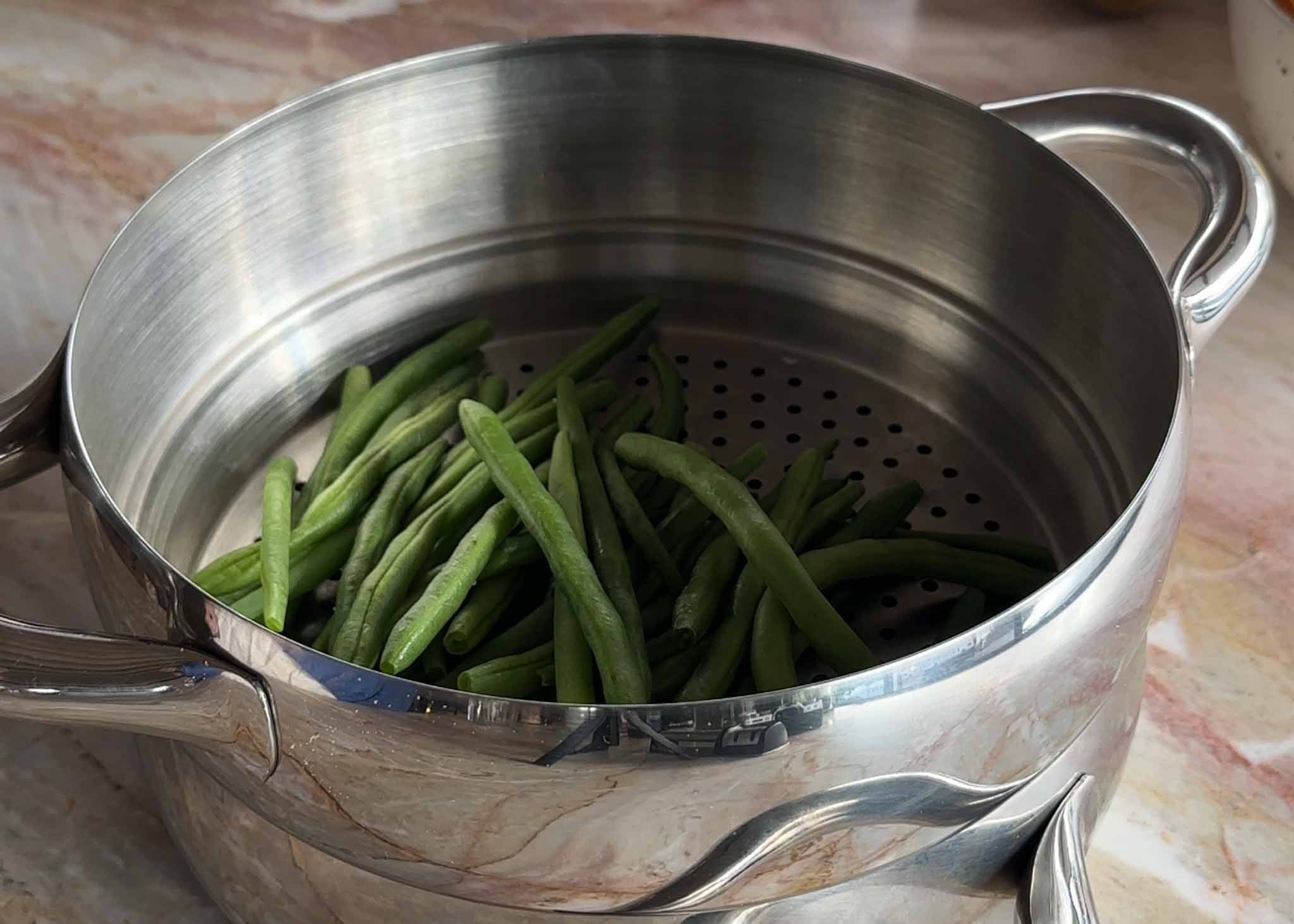
Step 5: Steam the beans until bright and just tender, then season with salt.
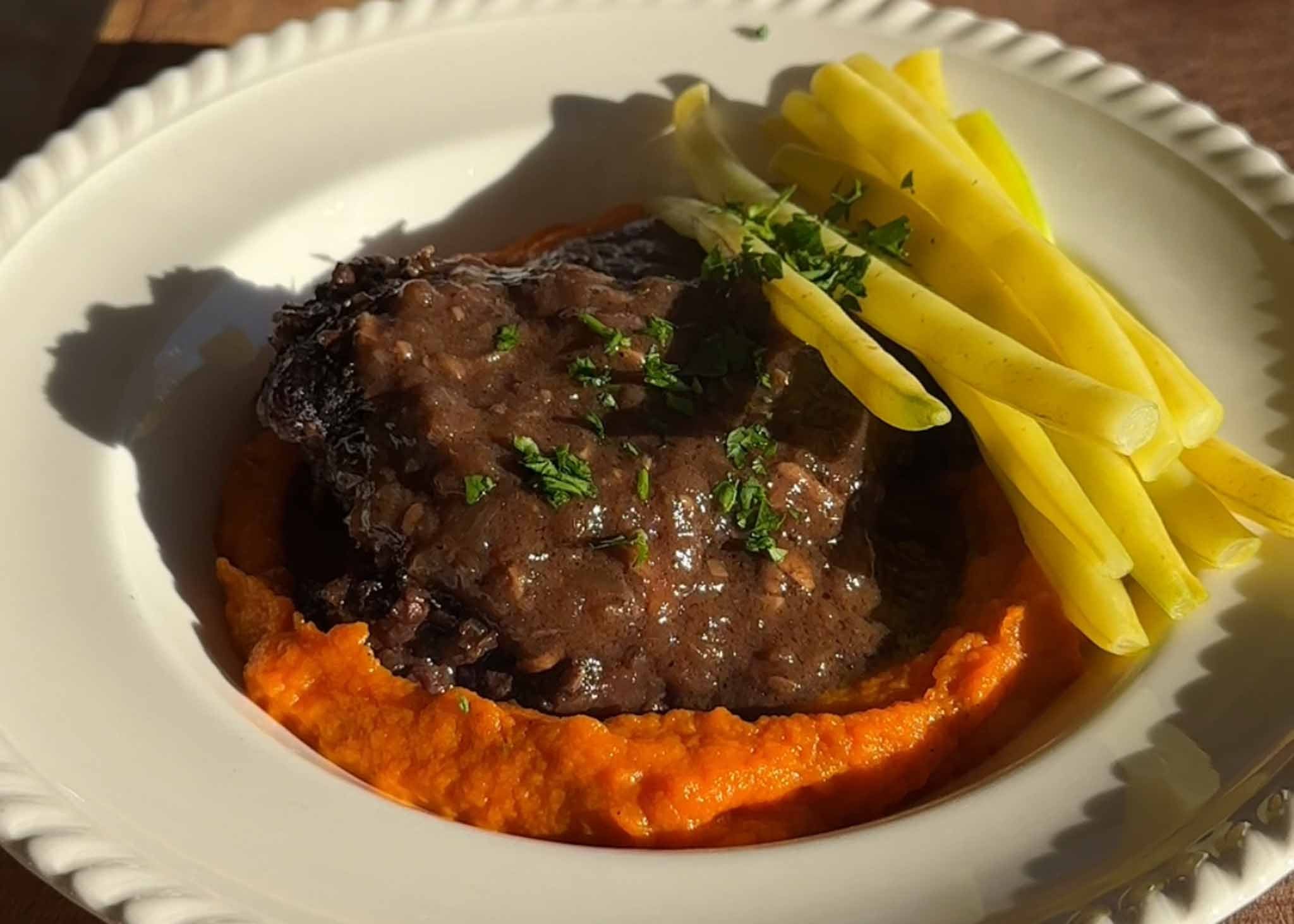
Step 6: Spoon the roasted carrot purée onto each plate and top with the beef cheek, beans and plenty of reduced red wine sauce.
Helpful tips
1. Give the beef cheeks enough time: If they don’t easily pull apart with a fork, they aren’t ready yet. Cover and continue braising for another 30 minutes before checking again.
2. Reduce the sauce properly: After removing the beef cheeks, simmer the strained braising liquid until it becomes glossy and concentrated. This transforms the thin cooking liquid into a rich sauce, so don’t rush this step.
3. Adjust the purée gradually: Begin with only 1 tablespoon of stock, then add more as needed while blending. It’s easy to loosen a thick purée, but difficult to fix one that has become watery.
Substitutions
Beef cheeks: Beef chuck can be used instead, although the texture and cooking time may vary.
Red wine: Replace it with additional beef stock and add a small splash of red wine vinegar to the finished sauce.
Carrots: Parsnip, sweet potato or pumpkin can be roasted and blended into a purée instead.
Beans: Serve with broccolini, asparagus or another steamed green vegetable.
Thyme: Rosemary can be used instead, but use it sparingly as it has a stronger flavour.
Equipment
A heavy ovenproof casserole dish with a well-fitting lid is best for slowly braising the beef cheeks. I suggest a cast iron casserole or oblong braising dish like this one I used from Le Creuset
You’ll also need a blender or food processor to make the roasted carrot purée completely smooth. I love my Magimix blender which comes with a glass jug.
Storage
Store the beef cheeks, carrot purée and green beans in airtight containers in the fridge for up to 3 days.
Reheat the beef cheeks gently in their sauce on the stovetop or in the microwave. Add a small splash of stock or water if the sauce has become too thick in the fridge.
The beef cheeks and sauce can also be frozen for up to 3 months. I recommend making the carrot purée and green beans fresh, as their texture may change slightly after freezing.
FAQ
Do I need to sear the beef cheeks first?
No. This version is designed to be as simple as possible, so all of the beef cheek ingredients go directly into the casserole dish. The long braising time and reduction of the cooking liquid still create a rich sauce.
How do I know when the beef cheeks are cooked?
They should be extremely tender and easy to pull apart with a fork. If they still feel firm or resistant, they need more time in the oven.
Can I make this recipe ahead of time?
Yes. Beef cheeks are perfect for making ahead and often taste even better the following day. Refrigerate them in the braising liquid, then remove any solidified fat before gently reheating and reducing the sauce.
What type of red wine should I use?
Use a dry red wine such as shiraz, cabernet sauvignon or merlot. It doesn’t need to be expensive, but it should be something you would happily drink.
Can I cook the beef cheeks in a slow cooker?
Yes. Add all of the beef cheek ingredients to the slow cooker and cook on low for approximately 8 hours, or until the meat is completely tender. Reduce the strained sauce separately on the stovetop before serving.
Can I freeze beef cheeks?
Yes. Allow the beef cheeks and sauce to cool completely, then freeze them together in an airtight container for up to 3 months. Defrost overnight in the fridge before reheating gently.
Related
Looking for other recipes like this? Try these:



Beef Cheeks with Carrot Purée
Ingredients
For the beef cheeks
- 600 g trimmed beef cheeks
- Salt and black pepper
- 1 brown onion finely minced
- 3 garlic cloves minced
- 1 tablespoon tomato paste
- 150 ml red wine
- 400 ml beef stock
- 2 thyme sprigs
- 1 bay leaf
- For the carrot purée
- 1 tablespoon plain flour
- 1 cup cold water
600g carrots, peeled and roughly chopped
- 1 teaspoon olive oil
- ¼ cup beef stock or as needed
- 1 teaspoon vinegar
- Salt to taste
To serve
- 300 g green beans trimmed
- 2 tablespoon parsley fresh, finely chopped
Instructions
- Preheat the oven to 160°C fan.
- Season the beef cheeks generously with salt and pepper.
- Place the seasoned beef cheeks, onion, garlic, tomato paste, red wine, beef stock, thyme and bay leaf into a large ovenproof casserole dish. Stir the liquid to combine, cover with a lid and transfer directly to the oven. Place the pot towards the top of the oven with a rack free below to roast the carrots on later.
- Braise for 3–3½ hours, turning the cheeks once or twice, until they’re extremely tender and easily pull apart with a fork. You'll add the carrots for the last hour of the beef cooking.
- Toss the carrots with 1 teaspoon olive oil and a generous pinch of salt. Spread them over a lined tray and add to the lower rack of the oven that the beef is in, roast until completely soft and slightly caramelised around the edges.
- Transfer the roasted carrots to a blender. Add 1 tablespoon of stock, the vinegar and a pinch of salt, then blend until completely smooth. Add another 1 -- 2 tablespoons of stock if needed to create a silky purée. You want to keep it as thick as possible.
- Once the beef cheeks are ready, carefully lift them from the braising liquid and let rest for 10 minutes.
- Simmer the remaining sauce/cooking liquid from the beef over medium-high heat until reduced, glossy and concentrated. If it needs thickening, mix together the flour and cold water and gradually whisk into the sauce until thickened and you have enough sauce to cover all three serves. Taste and adjust the seasoning.
- Steam or blanch the beans until just tender, then season with salt.
- Divide the carrot purée among three plates or containers and add the green beans and beef cheeks. Spoon the reduced red wine sauce generously over the top. Top with fresh parsley and enjoy!


Leave a Reply